
Past Exhibition
Korean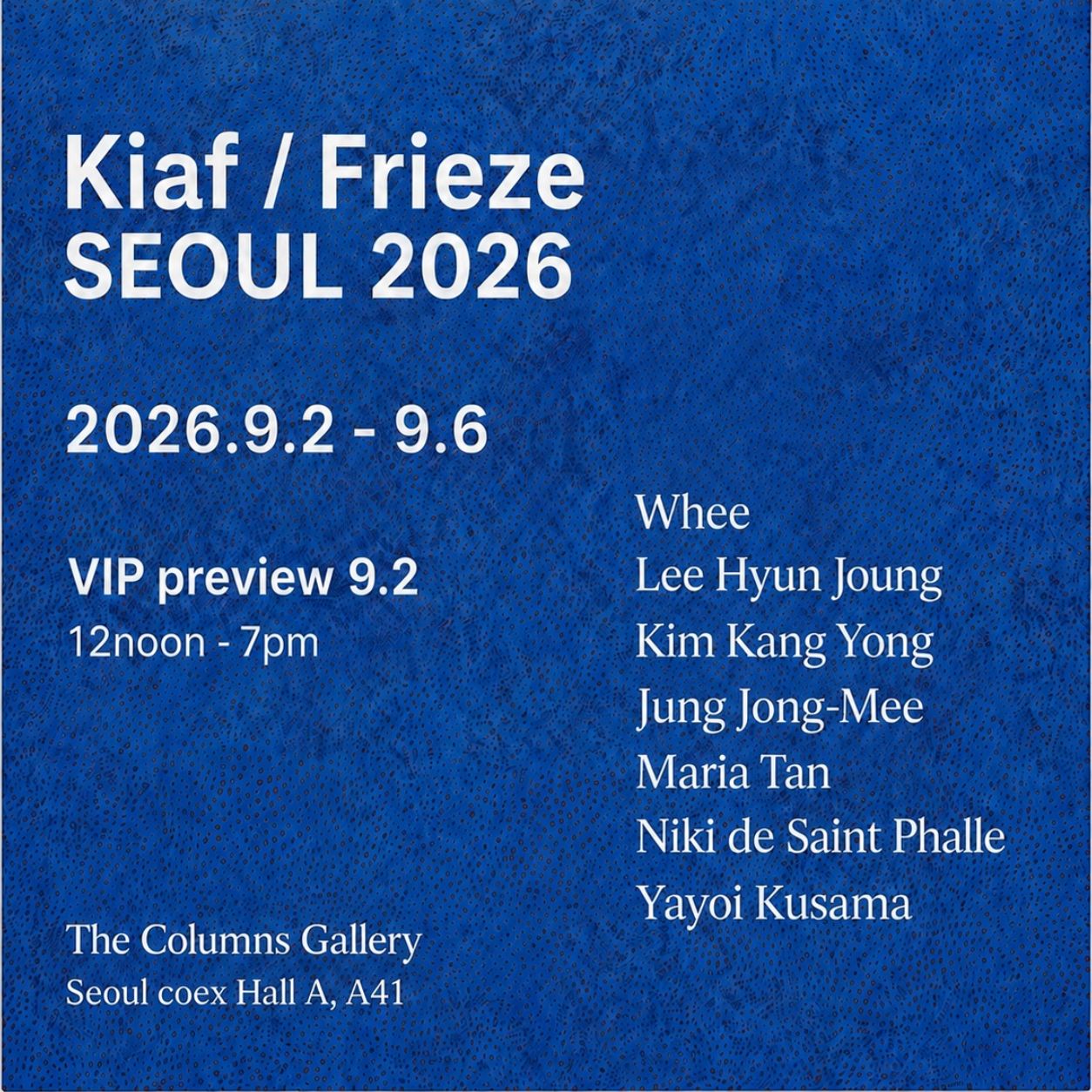
The Columns Gallery is proud to present a dynamic group exhibition at KIAF Seoul 2026, showcasing a dialogue between leading Korean and international contemporary artists.
Paper becomes memory. Sand becomes brick. Color becomes emotion. This edition brings together Jung Jong Mee, Lee Hyun Joung, Kim Kang Yong, Whee, and Maria Tan alongside icons Niki de Saint Phalle and Yayoi Kusama - seven artists, spanning Korea to Manila to France, united by one thing: material pushed until it tells the truth.
Venue | Kiaf SEOUL 2026
COEX Hall A, B, Grand Ballroom 513 Yeongdong-daero, Seoul
The Columns Gallery Booth A41
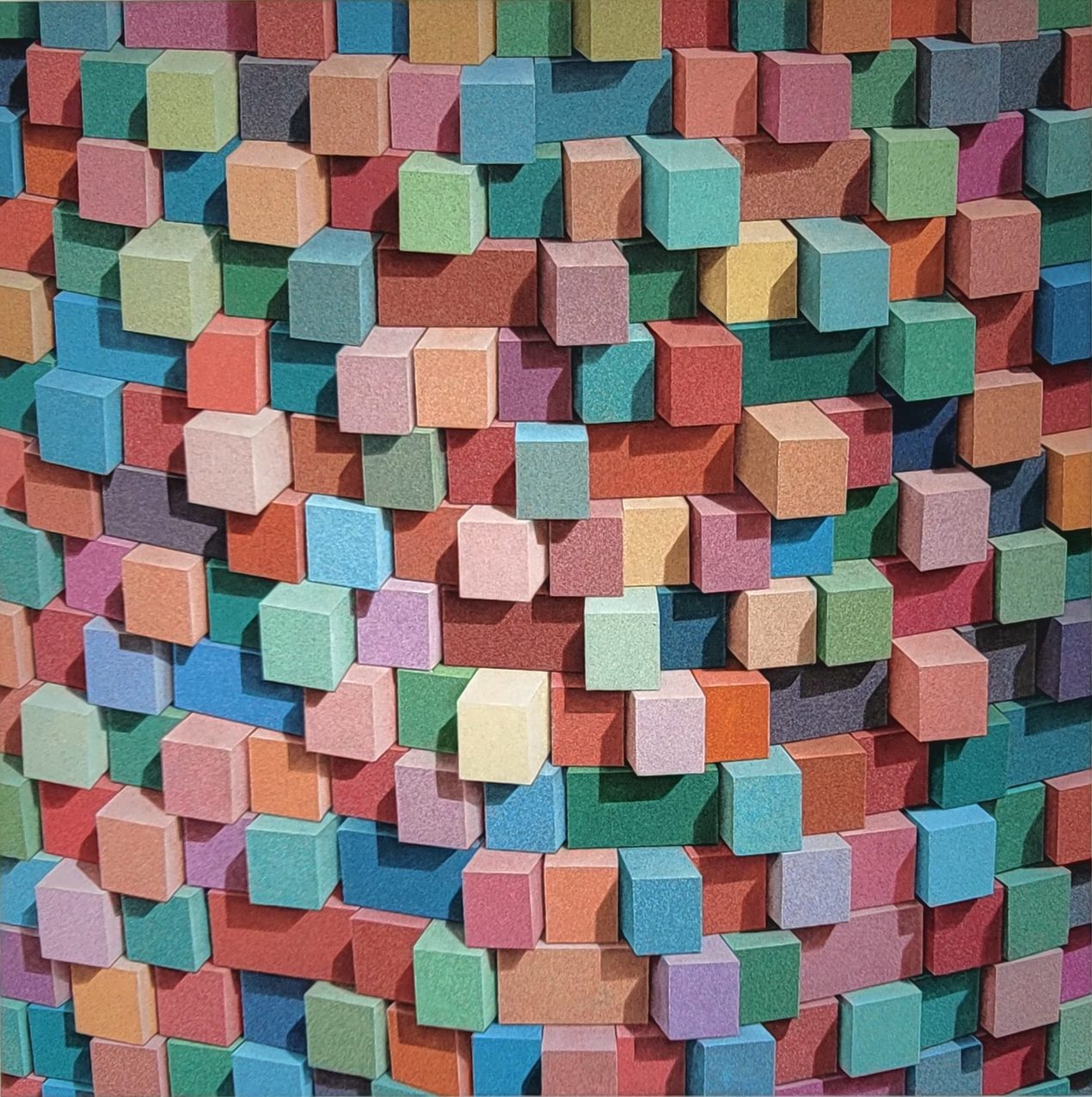
Kim Kang Yong, Reality + Image, 2025, Oil on sand and ground stone on board, 180 × 180 cm
Kim Kang Yong (b.1950, Korea)
Known as Korea's "brick painter," Kim Kang Yong has spent over five decades building his signature imagery from sand and adhesive, layering them into a tactile, sculptural surface that reads as brick, complete with convincing depth and shadow.
His fascination with the material traces back to his early years in Korea, where brick and sand carried a kind of everyday, lived-in familiarity. That relationship shifted when he moved to New York in the 2000s, where the scale and color of the city's brick facades struck him anew, opening his palette from muted monochrome into vivid multicolor and prompting a deeper meditation on locality and universality - how a material rooted in personal, local memory can also speak to something shared and global.
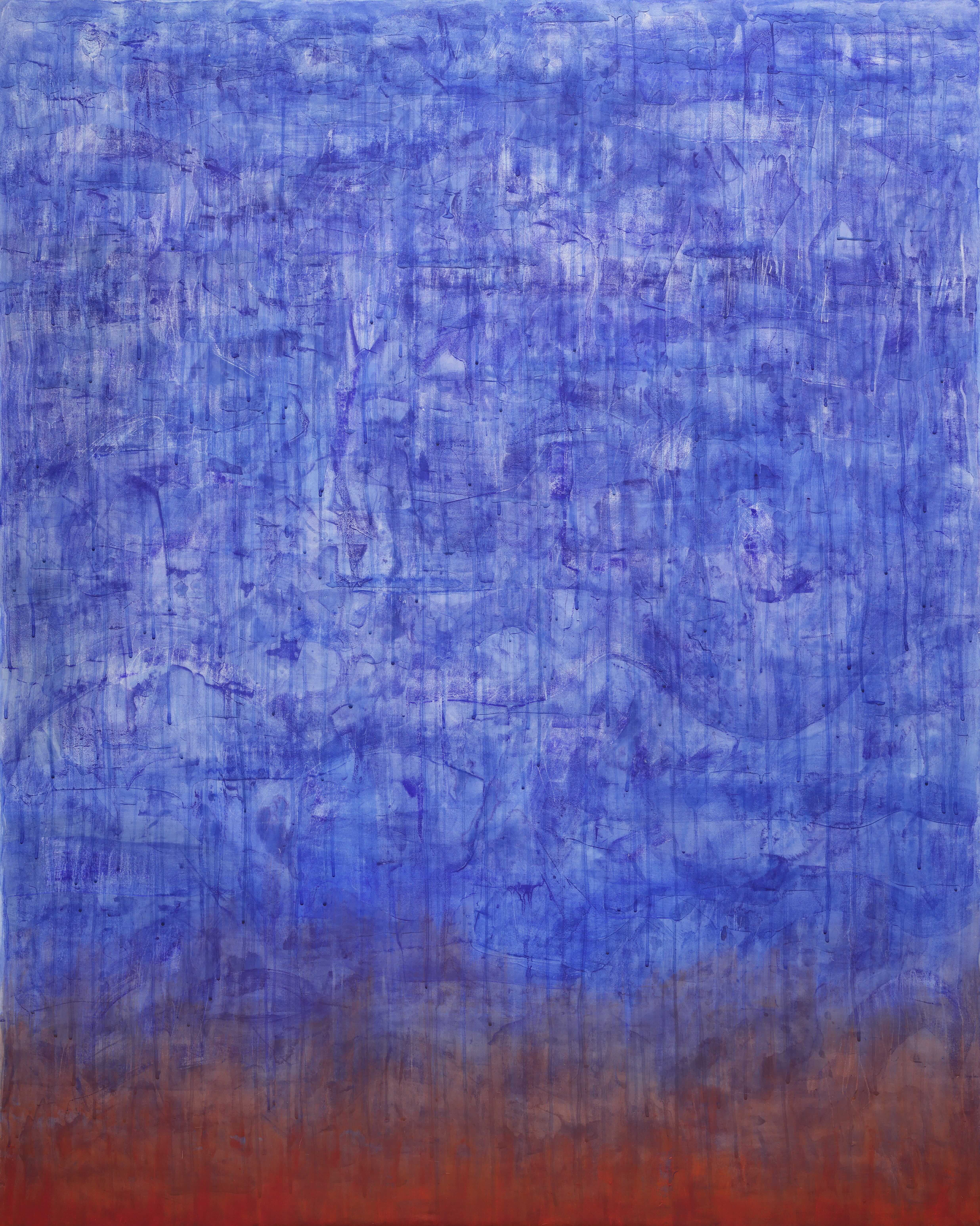
Jung Jong Mee, Song of Fisherman, 2025, Dyes, mineral pigment on ramie, 162 × 130 cm
Jung Jong Mee (b. 1957, Korea)
Jung Jong Mee builds her paintings through kongdaem, a traditional bean-emulsion technique once used to seal Korean floor paper. She layers ramie with starch paste, natural dyes, and mineral pigment over dozens of applications, reviving the light-reflecting depth of Goryeo Buddhist painting in place of the flattened, industrial convenience of tube paint. This technique underlies her ongoing series Song of Fisherman (어부사시사), named after a 17th-century sijo poem by Yun Seon-do, one of the first major Korean works written in Hangul rather than Chinese characters. Just as Yun proved the vernacular could carry classical weight, Jung uses Korea's own traditional materials to carry the same weight in paint, rendering the poem's sea and solitude through the slow accumulation of pigment, dye, and time.
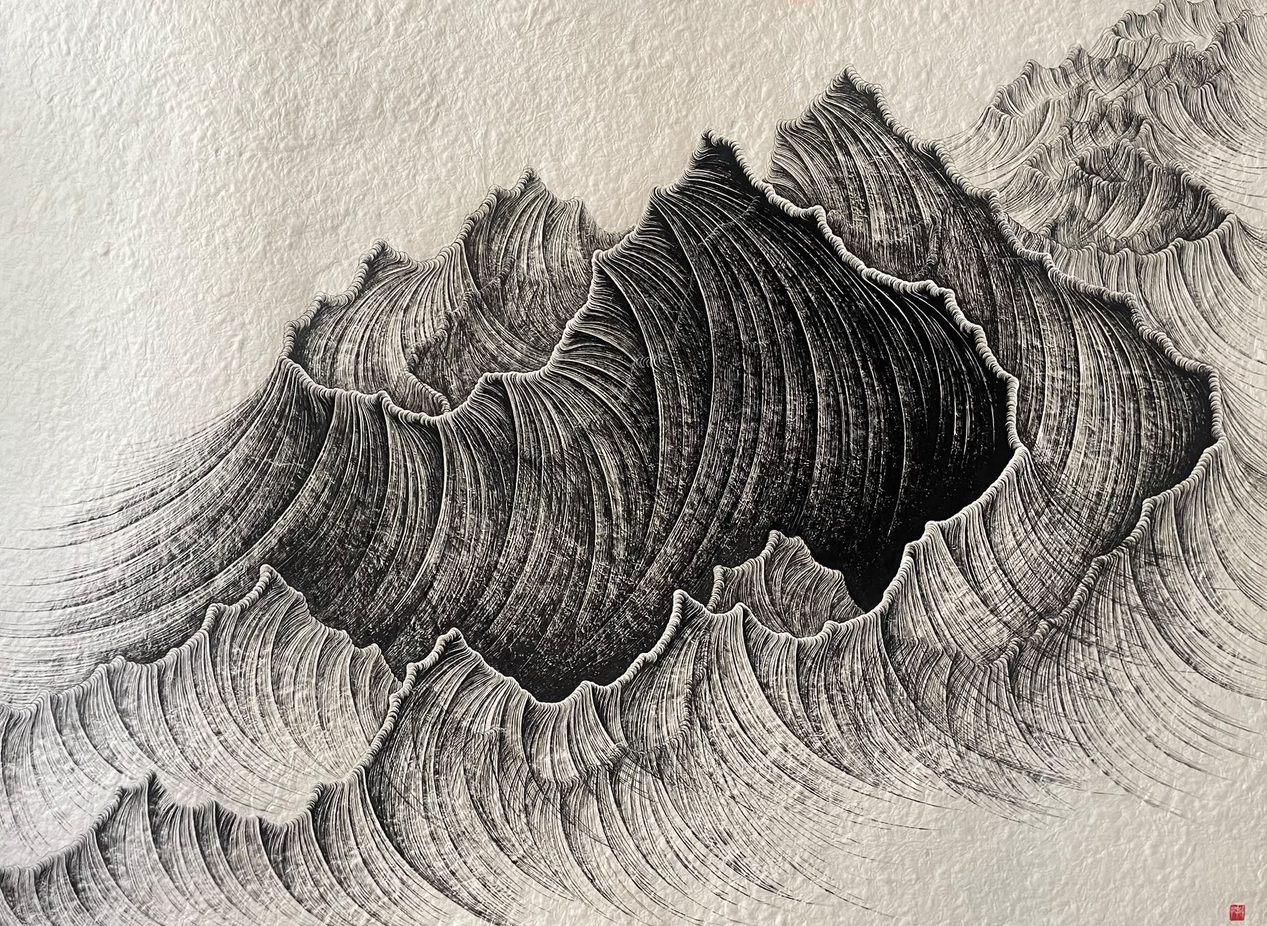
Lee Hyun Joung, Insolite, 2026, Ink and pigment on handmade Korean mulberry paper by the artist, 130 × 98 cm
Lee Hyun Joung (b. 1972, Korea)
Lee Hyun Joung has spent her career transforming hanji, traditional Korean mulberry paper, into a surface capable of holding memory, rhythm, and silence. In Insolite, that practice takes the form of wave upon wave of sinuous, hand-drawn lines, rising and receding across the canvas like geological strata or the ripple marks left by a retreating tide. The forms tend toward abstraction - is this a wave, or a mountain range seen from above? - and Lee leaves that question deliberately open, favoring the sensation of infinity over any fixed sense of scale. Rendered entirely in black ink, the lines are created to the rhythm of her own body, swelling and receding like breath.
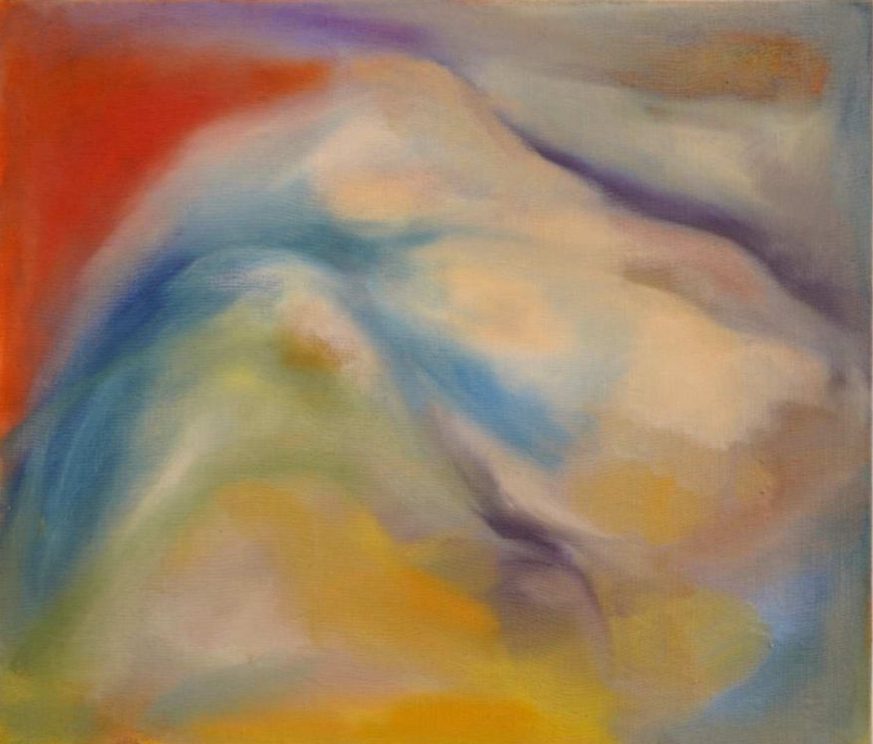
Kang EemYun, The Waiting Mountain, 2025, Oil, dry pigment and pastel on antique hemp, 61 × 71 cm
Kang EemYun (b. 1981, Busan, Korea)
Kang EemYun approaches abstraction through energetic charcoal gestures and layered surfaces charged with movement and psychological intensity. Her works balance spontaneity and structure, creating immersive visual fields filled with physical and emotional energy.
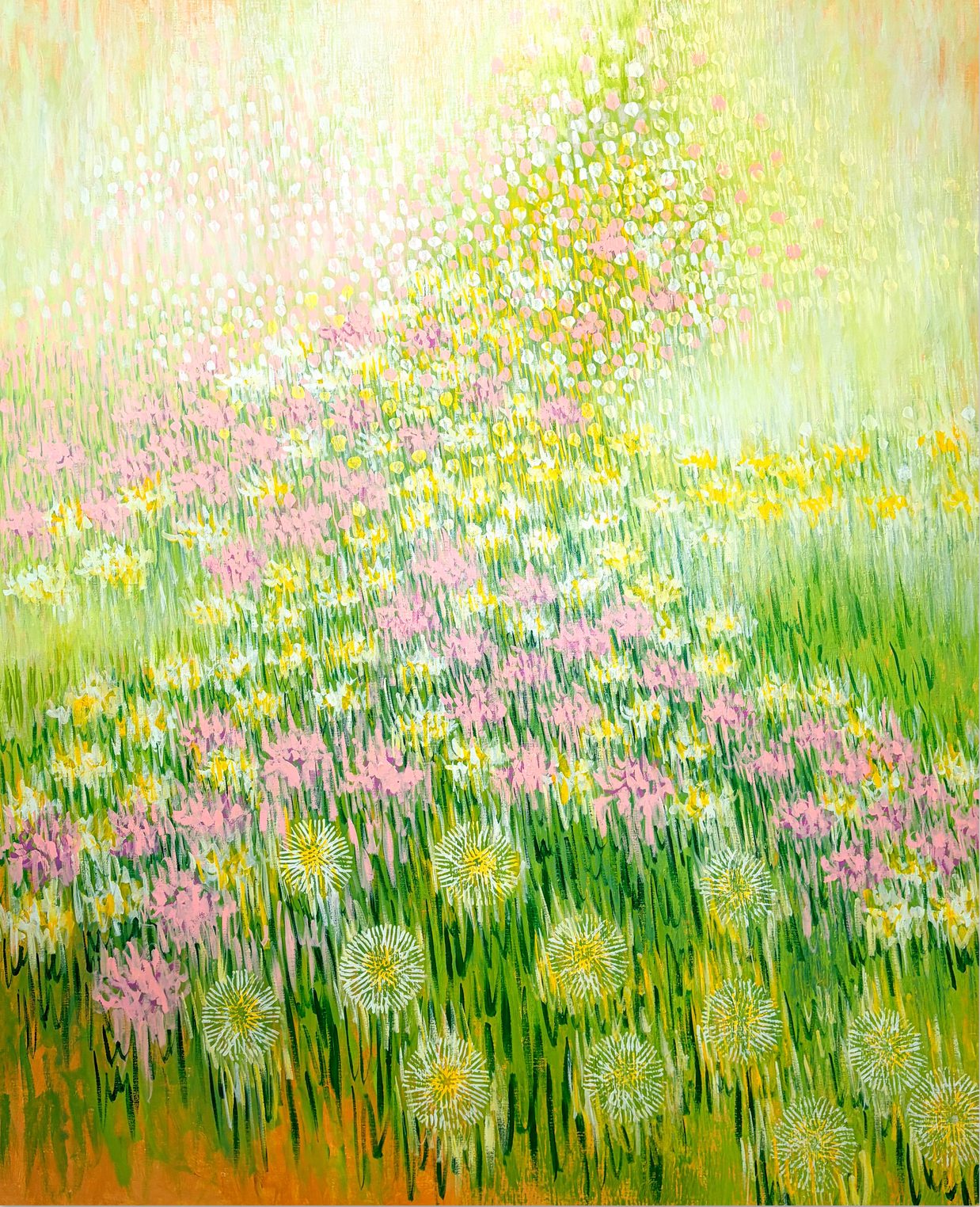
Maria Tan, Dandelions – Pink Meadow, 2026, Acrylic paint on canvas, 160 × 130 cm
Maria Tan (b. 2000, Philippines)
Maria Tan treats painting as a way of making perception itself visible - translating memory, emotion, and interior landscape onto canvas, working primarily from imagination rather than direct observation. Her practice returns often to the threshold moment of early morning, when color first touches the sky and light arrives as a kind of surprise. In Dandelions, Pink Meadow, that quality of soft, electric aliveness fills the canvas: a field of grass dissolving into a haze of pink, gold, and white blossoms, with dandelions rendered in fine radiating lines low in the foreground.
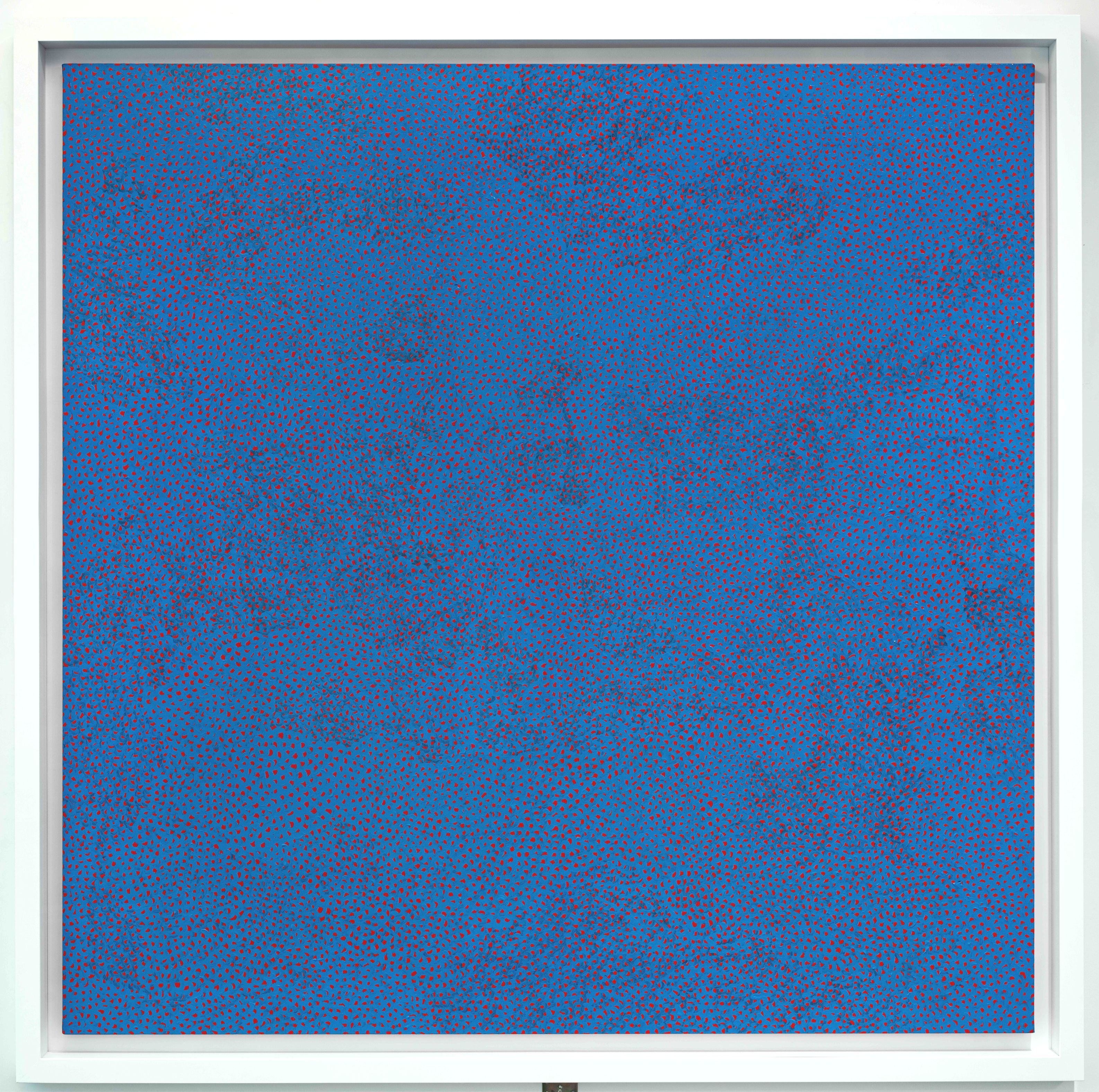
Yayoi Kusama, Infinity Nets (Blue), 2008, Acrylic on canvas, 152 × 162 cm
Yayoi Kusama (b. 1929, Japan)
Yayoi Kusama began her Infinity Nets after arriving in New York from Japan in 1958, building up mesh-like surfaces stroke by stroke in painting sessions that could last 40 to 50 hours. Rendered here in blue, the nets emerged in part from her own psychology — her repetitious painting served as a way of coping with hallucinatory visions she experienced from childhood — and in part from a drive toward dissolution and scale.
As Kusama described it, her nets grew beyond herself and beyond the canvases she was covering, eventually seeming to cover the walls, the ceiling, and the whole universe. For her, the act of painting became a form of release: “Forget yourself. Become one with eternity. Become part of your environment,” she once said. Infinity Nets remains her longest-running and most celebrated body of work — a meditation on infinity, obsession, and the boundary between self and cosmos.

Niki de Saint Phalle,
Nana,
c. 1968–69, Painted resin/plaster on iron base by Jean Tinguely,
each 65.4 × 29.2 × 15.9 cm, 69 × 32 × 18 cm
Niki de Saint Phalle (b. 1930, France – d. 2002, USA)
Niki de Saint Phalle began her Nanas in the mid-1960s, inspired in part by a visit from a pregnant friend, and the series would go on to define her practice for decades. Voluptuous, brightly painted, and often shown mid-dance or mid-leap, the Nanas — French slang for “broads” or “chicks” — reimagine the female form as joyful, powerful, and unapologetically large. They marked a deliberate turn in Saint Phalle's work, away from the darker, more violent Tirs (“Shooting”) paintings of her early career, toward something closer to celebration.
As she put it, the Nana carried “the rebirth and resurrection” of a feminine spirit “called up from the distant past of millennia,” standing as a rebuke to centuries of women confined to smaller, quieter roles. Rendered in bold color and sweeping curves, the Nanas have since populated public plazas and museum collections around the world, dancing figures that turned Saint Phalle's own hard-won liberation into a universal, and irresistibly joyful, symbol.