
Past Exhibition
KoreanABOUT THE ARTIST
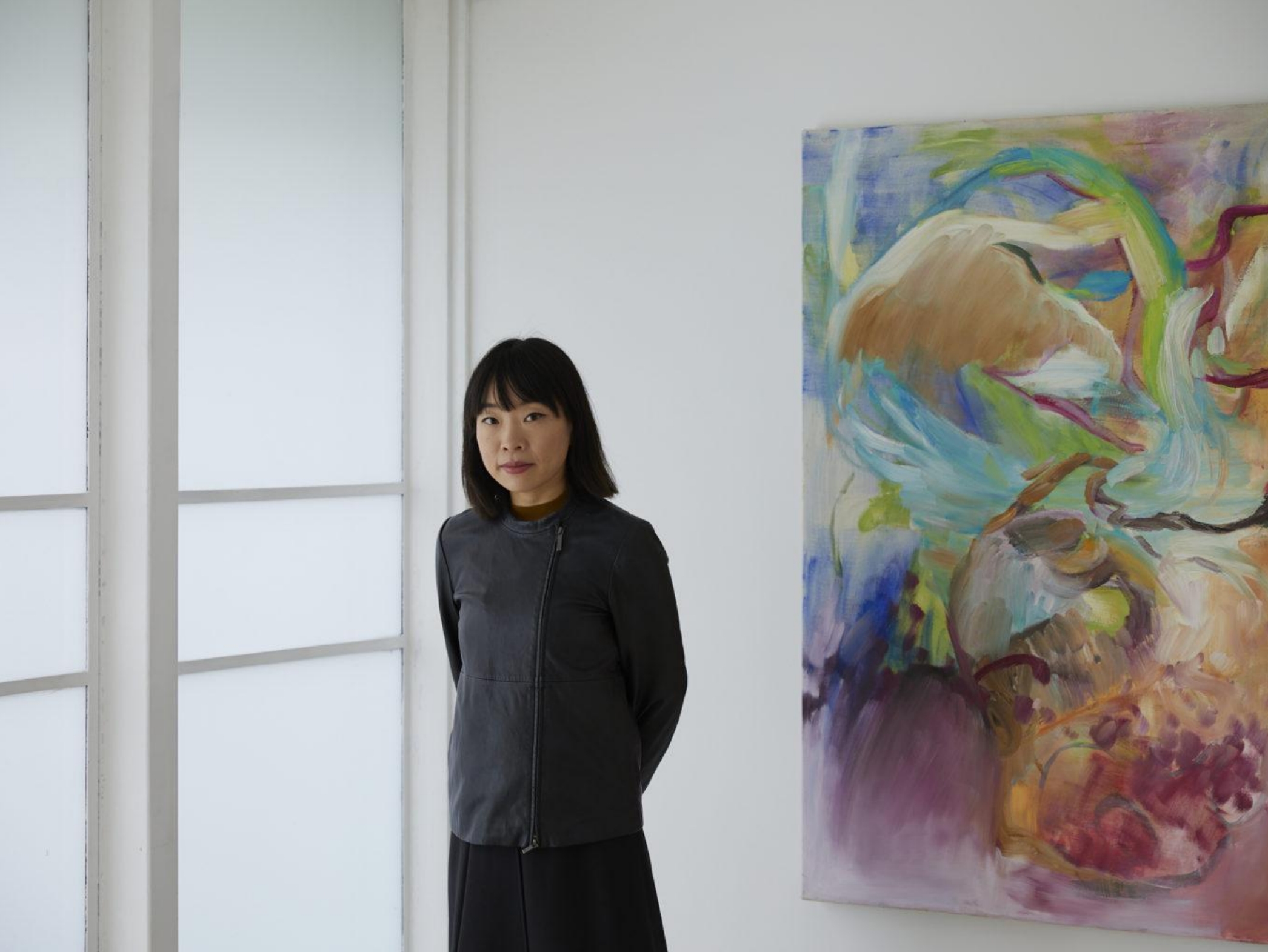
Kang EemYun (b. 1981, Korea) Lives and works in Milan
Kang EemYun (b. 1981, Busan, Korea) is a Korean painter based in Milan whose practice moves fluidly between abstraction and figuration. Drawing on nature, mythology, memory, and processes of transformation, she creates imagined environments in which organic forms emerge, mutate, and dissolve. Rather than depicting a recognizable landscape, Kang approaches nature as a psychological and sensory space—one shaped by perception, recollection, and the continuous movement between the visible and unseen.
Her paintings are characterized by fluid gestures, translucent layers, and biomorphic forms that can suggest plants, bodies, water, clouds, or geological formations without settling into a single interpretation. Colour plays an essential role, creating both spatial depth and emotional atmosphere while allowing forms to remain deliberately unstable.
In her recent paintings, Kang’s visual language has become increasingly distilled and atmospheric. The more pronounced organic structures of earlier works remain present, particularly in paintings where vivid greens and yellows evoke growth, vegetation, and bodily forms, but elsewhere these structures begin to soften and dissolve. Deep blues expand into fluid, almost aquatic spaces, while pale greens, turquoise, and muted tones create quieter fields in which forms appear only momentarily before receding again.
This movement between emergence and disappearance gives the recent works a distinctive sense of suspension. Nature is no longer encountered primarily through recognizable forms, but through traces of light, colour, movement, and memory. Landscape becomes less a physical place than an internal experience—a shifting field where perception and imagination continuously overlap.
Through this evolving language, Kang transforms painting into a space of metamorphosis, allowing abstraction and the natural world to coexist without clear boundaries. Her recent works reveal an increasingly subtle approach in which what is absent or barely visible becomes as significant as what is seen.